In 1987 the then-owner of this estate began grubbing up the old plantings on the western slope. They were low-yielding, awkward to work, and worth less per hectare than what he intended to replant. He cleared seven hectares over two winters. He then ran out of money, and four hectares survived by pure accident of timing.
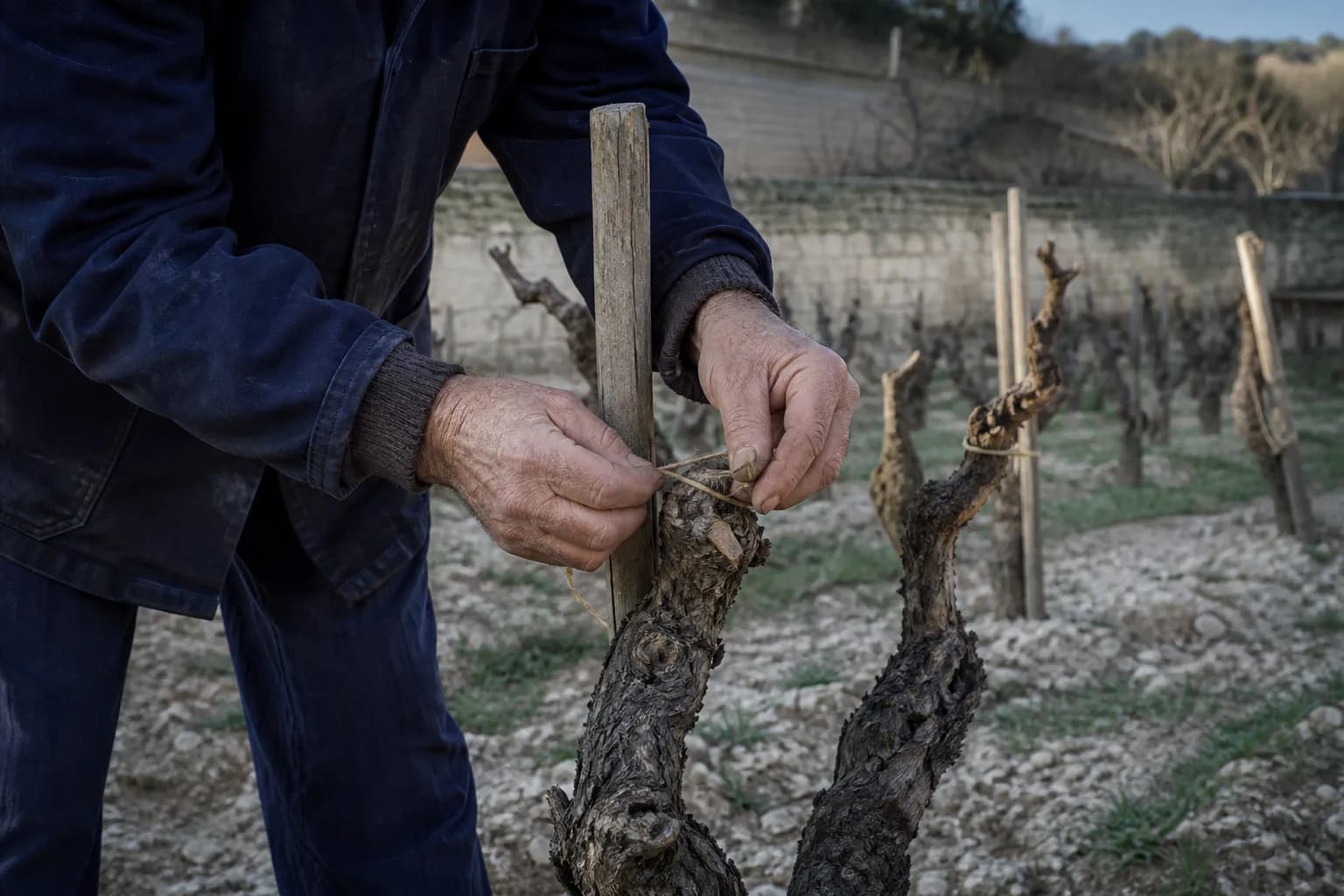
Those four hectares are now the only wine we bottle under our own label. They are still low-yielding and still awkward to work — the rows are too narrow for a modern tractor and the slope is too steep for a comfortable one — and they make about nine hundred bottles a year.
What old vines actually give you
Less than the romance suggests and more than the accountancy does. The fruit is smaller, the skins thicker, and the crop far more consistent between a difficult year and an easy one — which is the real argument for them, and a distinctly unromantic one.
What we are doing about it
Replanting the western slope, using cuttings taken from the surviving four hectares, at the original spacing. The first block went in during 2021 and will produce something worth drinking around 2032. Neither Perrine nor I will be running this estate by the time it is any good, which is more or less the definition of the job.
The first block will produce something worth drinking around 2032. Neither of us will be running this estate by then, which is more or less the definition of the job.