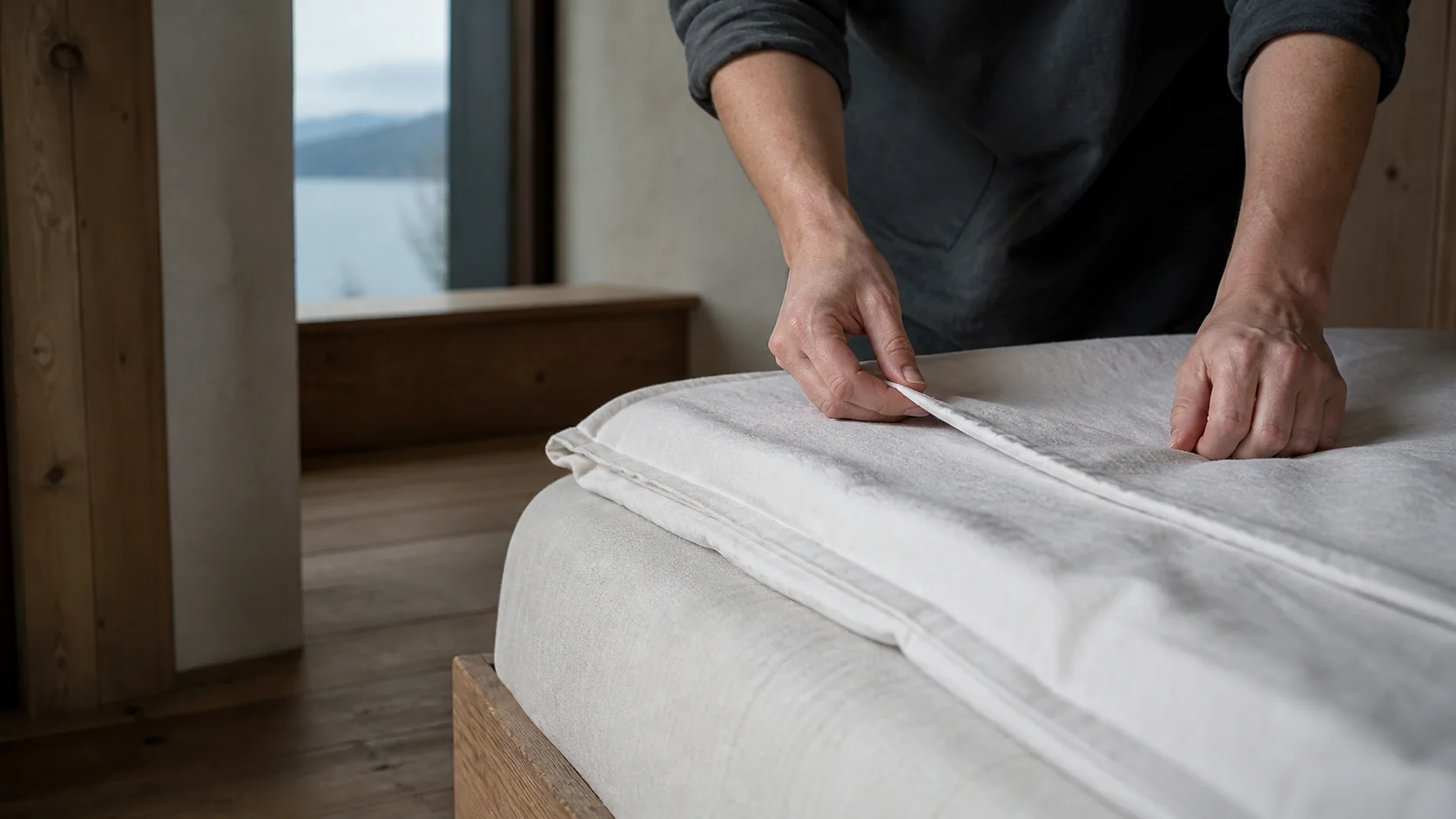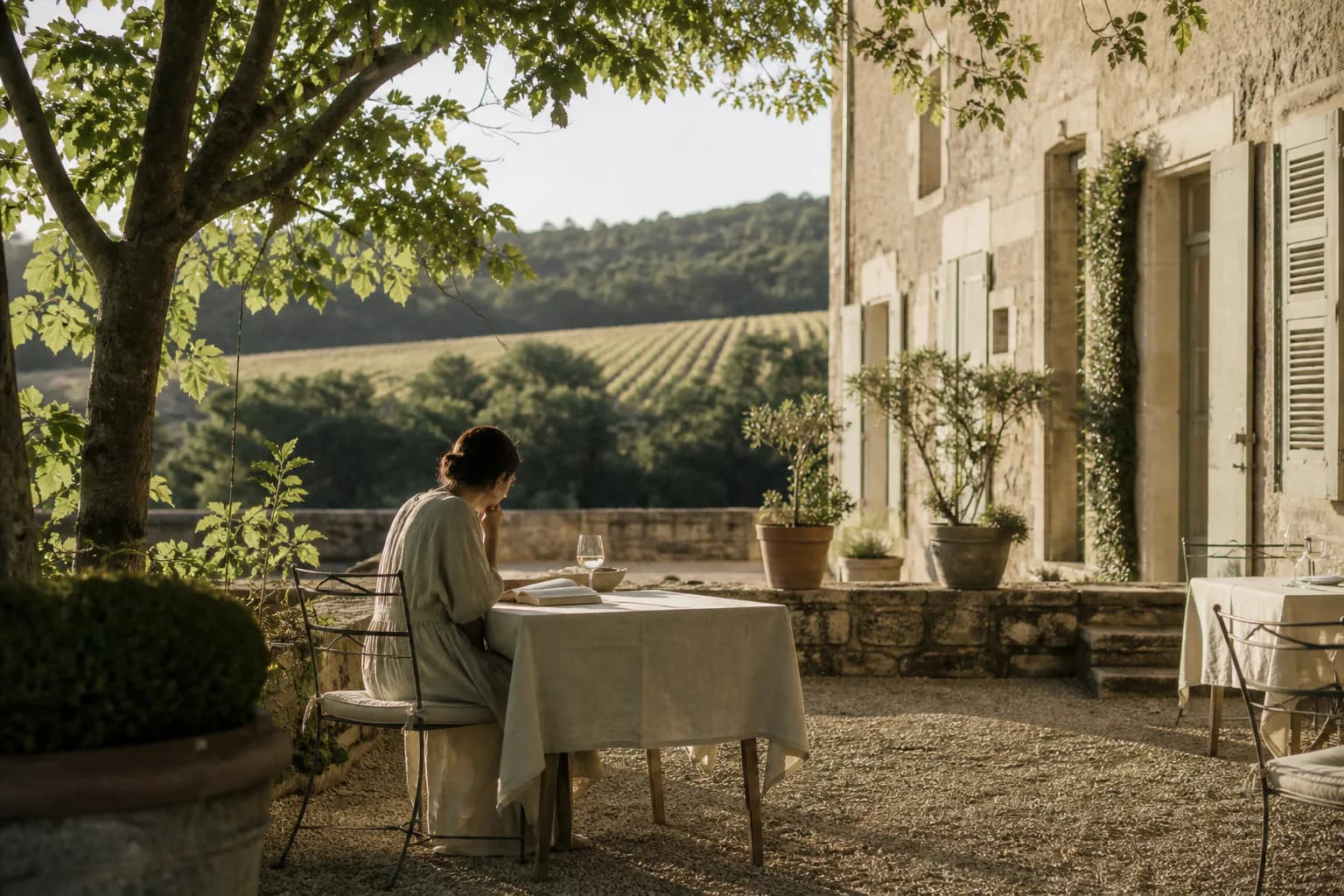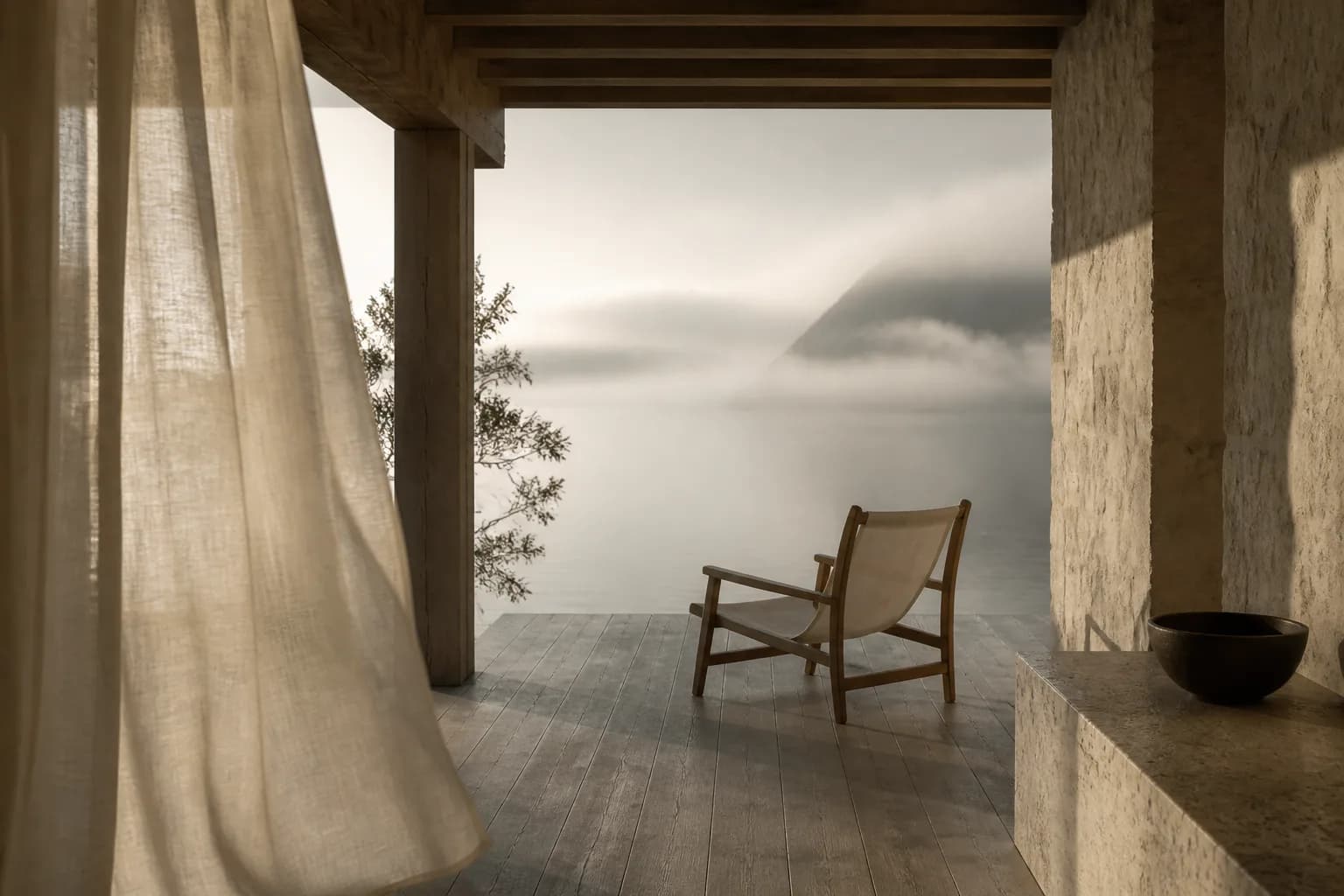
Guests use the word quiet about our houses more than any other, and for a long time we assumed they meant sound. We spent a considerable amount of money on that assumption: acoustic wool in the hayloft at Verane, triple glazing at Lindhavn, a door closer at Aubris that cost more than the door.
Those were the right decisions for the wrong reason. When we finally sat down with four years of guest letters and read them properly, the pattern was not about sound at all. It was about decisions. People were not describing rooms in which they could hear less. They were describing days in which they had to choose less.
The cost of a menu
The single most divisive thing we do is the table at Aubris: one menu, one sitting, no choice. It is also, by a distance, the thing guests write to us about most warmly. We understand why, now. A menu with thirty items on it asks you to make a decision you have no information with which to make. A menu with one asks you to make none.
That is not a reason to remove every choice from a hotel — a hotel that decides everything for you is not restful, it is presumptuous. It is a reason to be careful about which decisions you hand a guest, and to be honest that handing someone a decision is a cost, not a courtesy.
Where we get it wrong
We still get it wrong. The spa menu at Verane ran to nineteen treatments for years and we defended it as generosity; it was, in fact, a way of avoiding the harder work of knowing what to recommend. It is four now, one of which is not a treatment at all.
A menu with thirty items asks you to make a decision you have no information with which to make. A menu with one asks you to make none.
The test we now use, when someone proposes adding something to a house, is not whether it is good. Most proposals are good. It is whether it will require a guest to think about it. If it will, it has to be considerably better than good to earn its place.